
Buying Guide
Freehold vs Leasehold Landed Homes in Klang: What Bayuemas Buyers Should Know
Weighing freehold against leasehold before buying a landed home in Klang? Here's what actually differs in value, financing and resale.
By Setia Bayuemas Editorial Team
Quick answer
Under Malaysia's National Land Code 1965, land is alienated either in perpetuity (freehold) or for a term of years, most commonly up to 99 (leasehold). Freehold titles generally hold value better over the long run, face fewer financing restrictions as the property ages, and never require a renewal process. Every collection at Setia Bayuemas (Aurora I, Aurora II, Laelia IV and Ambrosia II) is freehold, which matters most for landed homes buyers intend to keep, pass down or sell decades from now.
Key insights
- Malaysia's National Land Code 1965 (Act 56) sets out two broad categories of land tenure: alienation in perpetuity (freehold) or for a term of years not exceeding 99 (leasehold).
- Leasehold titles have a finite lifespan. As the remaining lease shortens, properties can become harder to finance and less attractive to resell, because the buyer is effectively purchasing a shrinking asset.
- Freehold titles carry no expiry and no renewal process, which is a meaningful long-term advantage for a landed home intended to be kept for decades or passed to the next generation.
- All four collections at Setia Bayuemas (Aurora I, Aurora II, Laelia IV and Ambrosia II) are freehold, according to SP Setia.
Freehold vs Leasehold: The Core Difference
The distinction between freehold and leasehold in Malaysia is a matter of statute, not marketing terminology. Land administered under the National Land Code 1965 (Act 56) is alienated either in perpetuity, which is what "freehold" means in practice, or for a fixed term of years, almost always capped at 99 years, which is what creates a leasehold title. A leasehold title is not indefinite: it has a countdown built in from the day it was granted, regardless of how many owners the property passes through.
This matters more than it sounds, because the two categories are not simply two flavours of the same thing. A 99-year lease granted in the 1980s might have 40 years left today; one granted more recently might have 90. The remaining term, not just the leasehold label, is what actually affects a buyer's decision.
Why Freehold Matters More for Landed Homes
For a landed house, as opposed to a high-rise unit likely to be redeveloped within a lease cycle, the tenure question compounds over time. A family buying a terrace or semi-detached home is typically planning to live in it for years, potentially pass it to children, or at minimum hold it as a long-term asset. A freehold title removes an entire category of future uncertainty from that plan: there is no lease countdown to track, no renewal application to file with the state land office, and no risk of the property's value declining simply because the clock is running down, independent of the physical condition of the house itself. This is particularly relevant for estate planning, since a freehold title can be transferred to the next generation without the added complication of a shrinking lease term to negotiate around.
Leasehold owners, by contrast, need to actively monitor their remaining lease term and, in some states, apply to renew it well before expiry, a process administered through the state land and mines department, which can involve fees, processing time and no guarantee of automatic approval.
Resale and Financing: Where the Two Really Diverge
The practical gap between freehold and leasehold shows up most clearly at the point of resale and financing, not at the point of purchase. Banks generally become more conservative as a leasehold property's remaining term shortens, because the property is a depreciating legal asset independent of its physical condition: a bank is less willing to lend against collateral that could, in theory, revert to the state before a long loan tenure is repaid. This can mean tighter loan-to-value ratios or shorter maximum tenures on older leasehold titles, which in turn narrows the pool of buyers able to finance a purchase and can drag down resale value.
Freehold titles do not carry this structural ceiling. Their value still depends on all the ordinary drivers of property price — location, condition, market demand — but they are not fighting a shrinking legal clock on top of those factors.
Why Every Setia Bayuemas Collection Is Freehold
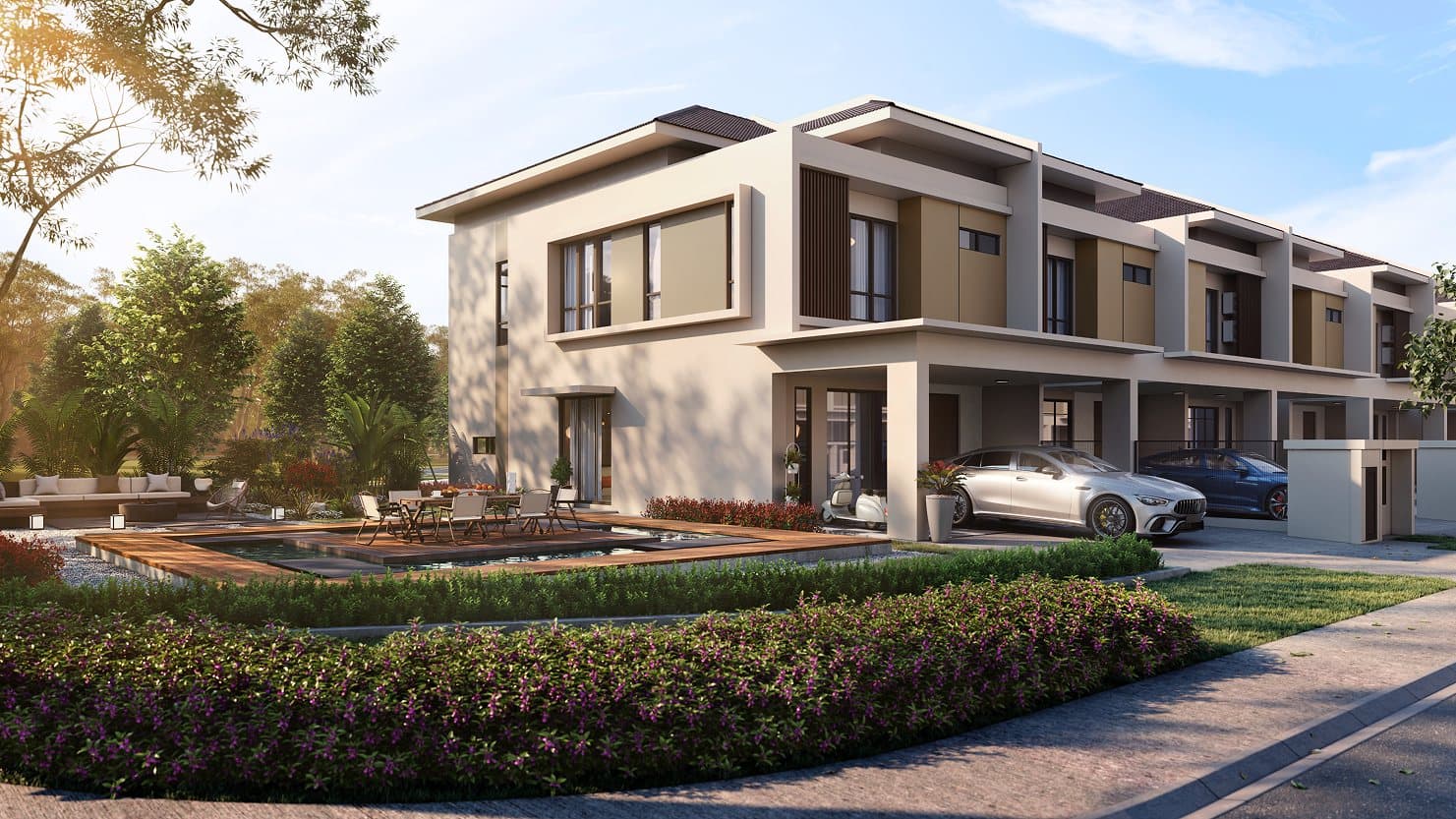
All land at Setia Bayuemas, across Aurora I, Aurora II, Laelia IV and Ambrosia II, is freehold with no restriction in interest. In practical terms, this means a buyer at any of the four collections is acquiring the same tenure advantage described above: no lease countdown, no renewal administration, and one less variable to worry about when the time eventually comes to sell or pass the property on.
FAQ
Frequently asked questions
SP Setia states that all collections at Setia Bayuemas (Aurora I, Aurora II, Laelia IV and Ambrosia II) are freehold with no restriction in interest.
Under the National Land Code 1965 (Act 56), land is alienated either in perpetuity (freehold) or for a fixed term of years, most commonly up to 99 (leasehold). A leasehold title has a finite lifespan from the date it was granted.
Generally, yes, freehold titles command a premium because they carry fewer long-term restrictions. Whether that premium is worth it depends on how long you intend to hold the property and how you plan to finance it.
In most states, yes, through an application to the relevant state land and mines authority, but this involves fees, processing time and is not automatic: it is a process to actively manage, not something that happens by default.
References
- Jabatan Ketua Pengarah Tanah dan Galian Persekutuan (JKPTG) (n.d.) National Land Code (Act 56 of 1965). Accessed: 28 September 2026.https://www.jkptg.gov.my/images/pdf/perundangan-tanah/NLC1956DIGITAL-VER1.pdf (opens in a new tab)
- Malaysia (1965) National Land Code 1965 (Act 56). Accessed: 28 September 2026.https://lom.agc.gov.my/act-detail.php?lang=BM&act=ACT+NO+56+OF+1965 (opens in a new tab)
- SP Setia Homes (2026) Setia Bayuemas [Website]. Accessed: 28 September 2026.https://spsetiahomes.com/setia-bayuemas (opens in a new tab)
 WhatsApp Us